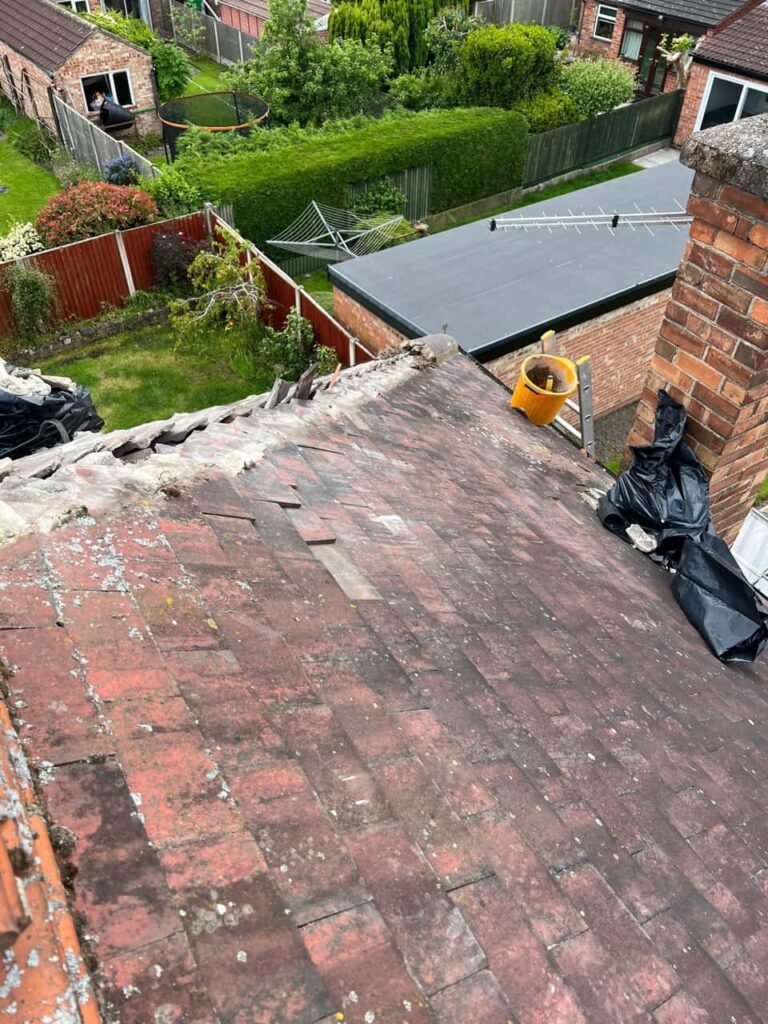
A single missing roof tile can appear to be a relatively minor problem, particularly when the rest of the roof looks perfectly sound. However, tiles form part of a carefully arranged weather-resistant covering, and when one becomes displaced or falls away, the area beneath can become more exposed to rain and wind.
For homeowners in East Bridgford, Nottingham, dealing with a missing tile promptly can help keep a small roofing defect from developing into a more extensive problem. At East Bridgford Roofing Repairs, we assess not only the missing tile itself but also the surrounding roof to establish why it moved and whether any related damage requires attention.
Why Does One Missing Tile Matter?
Pitched roofs rely on overlapping tiles to direct rainwater safely down the roof and towards the drainage system. Each tile contributes to this continuous protective covering.
When a tile is missing, the roof may be left with an exposed area where weather can reach materials that would normally remain protected.
The immediate concern is therefore not simply the appearance of the roof. It is whether the missing tile has compromised the roof’s ability to keep water out.
Rainwater Can Reach the Layers Beneath
Beneath the tiles are other important roofing components, which can include underlay and battens.
These materials form part of the overall roofing system, but they should not be considered a permanent substitute for the main roof covering.
If a missing tile remains unresolved, repeated rainfall can expose the area beneath to moisture. Over time, this may contribute to deterioration that extends beyond the original opening.
Acting early helps restore the primary weather-resistant covering before unnecessary exposure continues.
A Missing Tile Can Lead to a Roof Leak
Not every missing tile immediately produces a visible leak indoors. This can sometimes give the impression that the problem is not urgent.
However, water ingress can begin before obvious internal symptoms appear.
Moisture may travel along underlay, battens or roof timbers before eventually becoming noticeable as:
- Damp patches on ceilings
- Water marks within the loft
- Damp insulation
- Staining on timbers
- Moisture around internal finishes
Repairing the roof before these signs appear is generally preferable to waiting until water has already travelled further into the property.
Why Do Roof Tiles Go Missing?
Understanding why the tile became displaced is an important part of the repair.
Strong winds are an obvious cause, particularly where a tile or its fixing was already vulnerable. However, tiles can also become displaced because of gradual deterioration or problems affecting the surrounding roof covering.
Possible factors include:
- Weather exposure
- Deteriorated fixings
- Cracked or weakened tiles
- Movement within surrounding materials
- Previous damage
- Age-related deterioration
This is why simply replacing the visible missing tile without checking nearby materials can provide an incomplete solution.
Check the Surrounding Tiles as Well
When one tile has disappeared, neighbouring tiles deserve attention.
They may look acceptable from ground level while having shifted slightly or become less secure. This can be particularly relevant following strong winds, when several tiles may have been affected even though only one has completely detached.
A professional inspection can check for:
- Loose neighbouring tiles
- Small cracks
- Displacement
- Damaged fixings
- Exposed underlay
- Deterioration around the affected section
Addressing these issues at the same time can help prevent another problem developing shortly afterwards.
Wind Can Make an Existing Opening Worse
Once a tile is missing, the surrounding roof configuration has changed. Further windy weather may place additional pressure on neighbouring tiles and exposed materials.
An initially localised defect can therefore become larger if surrounding components also begin moving.
Prompt repairs restore the continuity of the roof covering and allow any loosened neighbouring materials to be secured before further weather exposure.
The Underlay May Already Need Attention
The condition beneath a missing tile depends partly on how long the area has been exposed and what weather it has experienced.
If the tile disappeared recently and the underlay remains sound, the repair may be straightforward.
Where the opening has been present for longer, the underlying materials should be checked for signs of deterioration.
This is an important distinction because replacing the tile alone will not correct damage that has already developed beneath it.
Missing Tiles Near Roof Edges Need Particular Attention
Tiles around roof edges can experience significant exposure to wind and weather.
If a tile is missing near an eave, verge, ridge or hip, the surrounding detail should be assessed carefully. These parts of the roof have specific functions and may contain other components that require attention.
Professional inspection helps establish whether the problem is limited to one tile or involves the wider roof detail.
What If the Missing Tile Is Near a Valley?
Roof valleys carry concentrated rainwater between adjoining roof slopes. A missing or displaced tile close to a valley can therefore be particularly important.
Water needs to move through this area without entering beneath the surrounding covering.
Where damage occurs close to a valley, the inspection should consider both the tile and the condition of the valley itself to ensure water continues to drain correctly.
Do Not Wait for a Ceiling Stain
One of the most useful principles of roof maintenance is to respond to external defects before they become internal problems.
A missing tile is already visible evidence that the roof covering has been compromised. Waiting for a damp ceiling merely means waiting for further evidence that water has travelled through the roofing system.
Early intervention can help:
- Restore weather protection
- Protect the underlay
- Reduce moisture exposure
- Preserve surrounding roofing materials
- Keep the repair localised where possible
This makes a visible missing tile worth investigating even when the property remains dry inside.
Is One Missing Tile a Sign of a Bigger Roofing Problem?
Sometimes it is, but often it is not.
An isolated tile can become damaged or displaced while the remainder of the roof stays in perfectly serviceable condition. In this situation, targeted repair may be all that is required.
Concern increases when an inspection finds additional issues such as:
- Numerous loose tiles
- Widespread cracking
- Repeated tile loss
- Deteriorated ridge or hip sections
- Ageing underlying materials
- Evidence of previous water ingress
The purpose of inspection is to establish which situation applies rather than assuming either that the problem is insignificant or that extensive work is automatically required.
Why Repeatedly Missing Tiles Deserve Further Investigation
If tiles regularly slip or disappear from the same roof, replacing them individually may not address the reason the problem keeps occurring.
Repeated failures could indicate deterioration involving fixings, surrounding materials or a wider section of the roof.
In these circumstances, a broader assessment is worthwhile.
The aim should be to determine why tiles continue moving and correct the underlying issue rather than repeatedly dealing with the latest visible symptom.
Can You Check a Missing Tile Yourself?
A missing tile can sometimes be identified safely from ground level, particularly if there is a clear gap in the roof covering.
Homeowners should avoid climbing onto the roof to investigate. Roofing surfaces can be difficult to access safely, and damaged or displaced materials may be unstable.
Instead, useful observations can include:
- Where the gap appears to be
- Whether roofing debris is on the ground
- Whether the problem followed strong winds
- Whether neighbouring tiles look uneven
- Whether any internal dampness has appeared
A professional roofer can then inspect the affected area more closely.
Why Professional Tile Repairs Provide Better Protection
A professional repair involves more than placing another tile into the visible gap.
The roofer can determine:
- Why the original tile was lost.
- Whether neighbouring tiles remain secure.
- Whether the underlay has been affected.
- Whether other roof details nearby are damaged.
- What repair is required to restore the area correctly.
This approach helps ensure the underlying problem is not overlooked.
Early Repairs Help Preserve the Existing Roof
One of the main advantages of responding quickly to minor roof damage is the opportunity to protect everything around it that remains sound.
If the problem is genuinely limited to one small section, early repair can prevent continued weather exposure from affecting a larger area.
Good roof maintenance is therefore not about carrying out unnecessary work. It is about dealing with small defects at the appropriate time so that serviceable parts of the roofing system can continue performing effectively.
Why Choose East Bridgford Roofing Repairs?
At East Bridgford Roofing Repairs, we provide professional roof repairs, inspections and new roofing services throughout East Bridgford, Nottingham.
When dealing with missing or slipped tiles, we assess the affected area rather than focusing only on the obvious gap. By checking neighbouring materials and relevant underlying components, we can establish whether a straightforward local repair is appropriate or whether additional attention is required.
Our aim is to provide proportionate, dependable roofing work that restores effective protection without unnecessary intervention.
Conclusion
A missing roof tile may be a small defect, but leaving the opening exposed can allow rain and wind to affect materials that should remain protected. The longer the problem is left, the greater the opportunity for moisture ingress, neighbouring tile movement and deterioration beneath the roof covering.
Acting early also allows the surrounding roof to be checked while the problem may still be localised. In many cases, timely professional repair can restore the roof without the defect developing into something more extensive.
If you have spotted a missing roof tile at your property in East Bridgford, Nottingham, contact East Bridgford Roofing Repairs. We can inspect the affected area, identify any related damage and carry out the appropriate repair to restore reliable weather protection.
Call us on: 0115 647 1193
Click here to find out more about East Bridgford Roofing Repairs
Click here to complete our contact form and see how we can help with your roofing needs.