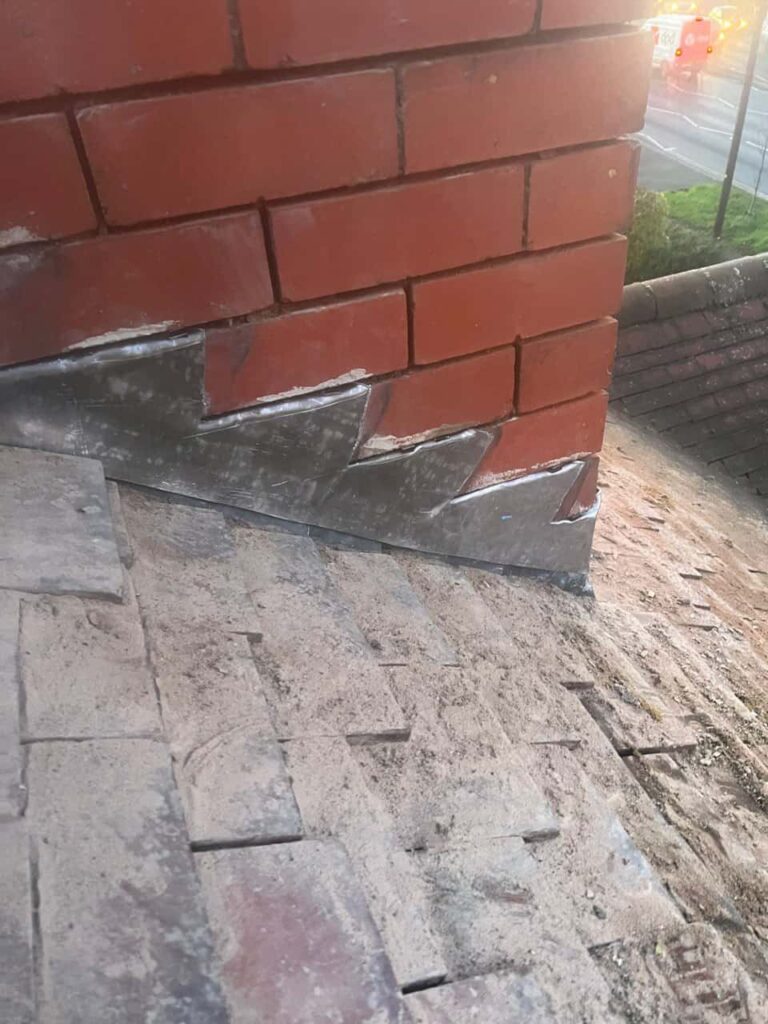
Practical Steps to Limit Damage and Identify the Cause
A roof leak can appear suddenly, even when there have been no obvious warning signs. Water may begin dripping from a ceiling during heavy rain, a damp patch may develop around a chimney breast, or moisture may become visible inside the loft.
Although the leak can seem unexpected, its underlying cause may have been developing gradually. A slipped tile, deteriorated flashing or blocked drainage channel can remain unnoticed until particular weather conditions allow water to enter. Taking the right action promptly can help limit internal damage and ensure the source is properly addressed.
Protect the Area Beneath the Leak
The first priority is to reduce the effect of water entering the property. Move furniture, electrical items and other belongings away from the affected area where it is safe to do so. Place a suitable container beneath any active dripping and use towels or protective coverings to manage smaller amounts of moisture.
If water is collecting in a ceiling rather than dripping freely, avoid disturbing the affected material. A saturated ceiling can become unstable, so keep people away from the immediate area and arrange a professional assessment.
Check the Loft Without Taking Risks
If your loft is safely accessible, a visual inspection may provide useful information. Look for wet timbers, damp insulation, staining on the underside of the roof covering or water tracking along rafters.
Bear in mind that the point where water becomes visible indoors may not be directly beneath the roof defect. Water can travel along underlay, timbers and other components before reaching the ceiling below.
Do not walk on unsupported insulation or attempt to inspect the external roof yourself. Roof surfaces can be slippery, and damaged materials may not be secure.
Record When and Where the Leak Appears
Useful observations can help a roofer narrow down the likely source. Make a note of:
- The room and precise area affected
- Whether the leak occurs during heavy, prolonged or wind-driven rain
- When the moisture first became visible
- Any recent strong winds or severe weather
- Whether dampness appears near a chimney, valley, skylight or roof junction
- Any visible changes to tiles, slates or guttering from ground level
Photographs of internal staining or active water entry can also show how the problem develops between inspection and repair.
Arrange a Professional Roof Inspection
A professional inspection should examine more than the visible damp patch. The aim is to trace the route of the water and identify why the roof has stopped keeping the property dry.
Possible causes include:
- Cracked, missing or displaced tiles
- Loose or deteriorated flashing
- Defects around roof penetrations
- Blocked or damaged valleys
- Worn flat roofing materials
- Damaged underlay beneath the roof covering
- Failed mortar at ridge or verge details
- Overflowing or defective roof drainage
- Weaknesses in an earlier repair
A thorough assessment considers the affected area alongside surrounding components. This is important because repairing only the most obvious defect may not resolve the leak if several connected details have deteriorated.
Avoid Relying on a Temporary Surface Fix
Applying sealant to a visible gap may appear to stop water briefly, but it does not necessarily correct the underlying fault. Moisture may continue entering elsewhere or become trapped beneath the roof covering.
An effective repair should address the cause of the leak, reinstate the affected roofing materials and check whether nearby components remain secure and watertight. This approach provides a more reliable result than repeatedly treating the internal symptom.
Why a Leak Can Appear Without Previous Warning
Some roof defects only become apparent under a particular combination of rainfall and wind direction. A slightly displaced tile might cope with ordinary rain but allow water beneath the covering during stronger winds. Similarly, a valley may drain normally until debris restricts the flow during a downpour.
Age-related movement, weathering and repeated temperature changes can also weaken fixings and junctions gradually. The roof may continue functioning until one component moves or deteriorates enough to create an entry point.
For properties in East Bridgford, Nottingham, periodic roof checks can help identify these subtle changes before they result in visible water ingress.
Look Beyond the Immediate Leak
Once the source has been found, it is sensible to assess whether water has affected other parts of the roof or interior. Damp insulation may be less effective, timber can remain wet after the visible leak stops, and ceiling finishes may need time to dry.
The surrounding roof covering should also be checked for related wear. If one tile has slipped because its fixing has deteriorated, nearby tiles of a similar condition may require attention. Identifying connected weaknesses can reduce the likelihood of another leak appearing soon afterwards.
Conclusion
When a roof leak appears unexpectedly, protect the affected room, avoid unsafe access and record as much information as possible. The next step should be a professional inspection that traces the water to its true entry point and determines whether the problem is isolated or part of wider deterioration.
East Bridgford Roofing Repairs provides careful roof assessments and targeted repairs for properties in East Bridgford, Nottingham. If you have noticed dripping, damp patches or unexplained staining, contact the team to arrange an inspection and establish the appropriate next step.
Call us on: 0115 647 1193
Click here to find out more about East Bridgford Roofing Repairs
Click here to complete our contact form and see how we can help with your roofing needs.